
In late January 2026, Anthropic quietly released something that looked utterly harmless: a set of open-source plugins for their Claude Cowork tool. No flashy keynote, no billion-dollar acquisition announcement—just a GitHub repository filled with Markdown files, JSON configs, and simple instructions.
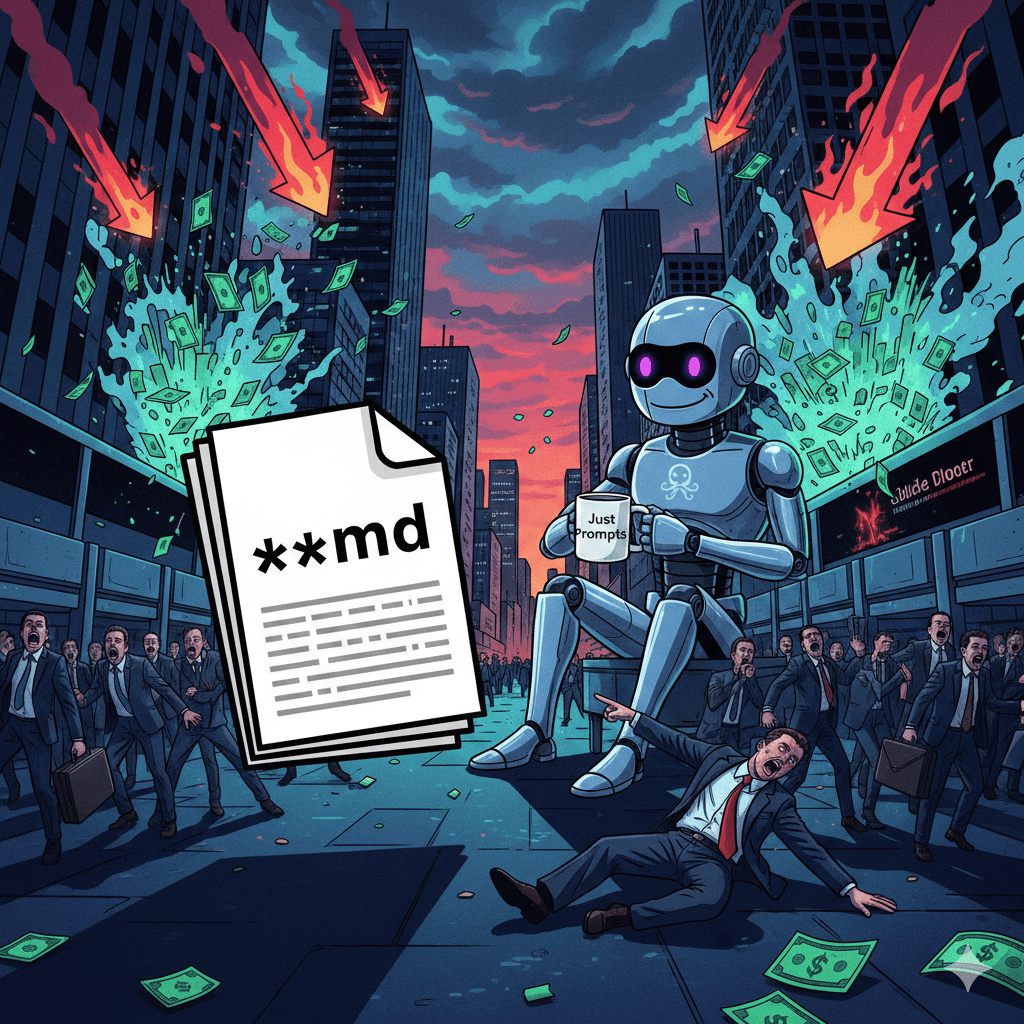
By early February, roughly $285 billion in market value had evaporated from software, legal tech, financial services, and related stocks in a single brutal trading session. Bloomberg called it a rout. Reuters dubbed parts of it a wake-up call for AI disruption. On social media and forums, people started referring to it as the “SaaSpocalypse.”
What exactly happened? And why did plain-text files trigger one of the sharpest sector selloffs in recent memory?
The Spark: 11 Plugins Dropped on January 30, 2026
On January 30, 2026, Anthropic pushed live the repository: github.com/anthropics/knowledge-work-plugins.
It’s an open-source collection of 11 plugins designed to turn Claude Cowork (Anthropic’s desktop AI agent) into specialized role-based assistants for knowledge workers. The plugins cover domains like:
- Legal
- Sales
- Marketing
- Finance
- Data analysis
- Product management
- Customer support
- And more
Installation is straightforward—add them via the Claude plugin marketplace or command line. No heavy coding required.
Each plugin bundles:
- Structured prompts and workflows written in Markdown (often in skills/ folders)
- Tool connectors (via MCP servers for Slack, Box, Microsoft 365, Jira, etc.)
- Simple command definitions
Nothing proprietary or compiled. Just readable text files telling Claude how to behave like a domain expert.
The legal plugin stole the spotlight. Located at: https://github.com/anthropics/knowledge-work-plugins/tree/main/legal
It includes instructions for tasks such as:
- Reviewing contracts
- Triaging NDAs
- Assessing compliance risks
- Drafting templated responses
- Preparing for legal meetings
Analysts and investors saw it and thought: This is 200-ish lines of Markdown replicating logic that enterprise legal software companies charge thousands (or tens of thousands) per seat for.
The Market’s Violent Reaction (February 3, 2026)
The plugins launched quietly on a Friday. Markets digested over the weekend. Come Tuesday/Wednesday, panic selling hit:
- Thomson Reuters — one of the biggest legal information and workflow providers — dropped sharply (reports cite 7–16% in sessions, with broader pressure continuing).
- LegalZoom fell around 20%.
- Broader software baskets (e.g., Goldman Sachs US software index) posted some of their worst days in years.
- European data and legal-tech names (RELX/LexisNexis parent) tumbled too.
- Total estimated wipeout: ~$285 billion across software, services, and adjacent sectors (Bloomberg, Reuters, and multiple financial outlets).
Why the overreaction? Investors interpreted the release as proof-of-concept that general-purpose AI agents + open-source prompts could soon commoditize high-margin, human-heavy SaaS workflows. Per-seat licensing models suddenly looked vulnerable when one AI subscription might handle the output of 5–10 human seats + specialized tools.
Headlines screamed variations of:
- “200 lines of Markdown just triggered a $285 billion sell-off”
- “Anthropic wiped $285B off the stock market with a folder of prompts”
- “SaaSpocalypse: How Claude Cowork plugins spooked Wall Street”
Was the Panic Justified?
Many commentators argue the market overreacted—classic “sell first, ask questions later” behavior.
- The legal plugin isn’t replacing lawyers or full enterprise suites overnight. It’s a starting point, great for repetitive tasks but still requiring human oversight for complex judgment.
- No evidence yet of massive real-world displacement; it’s early demonstration, not proven replacement.
- Some stocks (e.g., certain legal-tech names) even rebounded partially in following days as cooler heads prevailed.
But the direction feels undeniable to many:
- AI agents operate above traditional software UIs. You describe the outcome; the agent orchestrates tools and logic.
- Workflow logic once locked in expensive SaaS can now live in plain text + a powerful model.
- Companies with strong data moats, clean APIs, and agent-friendly access will thrive as the “system of record” layer.
- Pure UI-wrapper tools with restricted APIs? They’re at existential risk.
Where to See It Yourself
The files that started it all are completely public:
- Main repo → https://github.com/anthropics/knowledge-work-plugins
- Legal plugin folder → https://github.com/anthropics/knowledge-work-plugins/tree/main/legal
Browse the skills/ Markdown files. You’ll see structured prompts, example workflows, and tool-calling instructions—nothing more exotic than that.
Open source under Apache 2.0. Anyone can fork, tweak, or build on them.
The Bigger Picture
This episode isn’t really about one Markdown folder. It’s a flashing neon sign that the economics of knowledge work are being repriced in real time.
Enterprise software isn’t dying—but the old playbook (high per-seat fees for siloed workflows) is getting disrupted faster than most expected.
The real winners will be platforms that embrace agents, expose rich APIs, and become indispensable data sources rather than gatekeepers.
The markdown didn’t “crash” the market. It simply held up a mirror—and Wall Street didn’t like the reflection.
What do you think? Is this the beginning of the end for traditional SaaS pricing, or just another AI hype cycle overcorrection? Drop your take below.
(Current as of February 11, 2026 – markets move fast in the AI era.)
 ScrollUnlock
Leave a comment